 MedDataTool
Amoxicillin for Tooth Infection: How Fast This Antibiotic Works
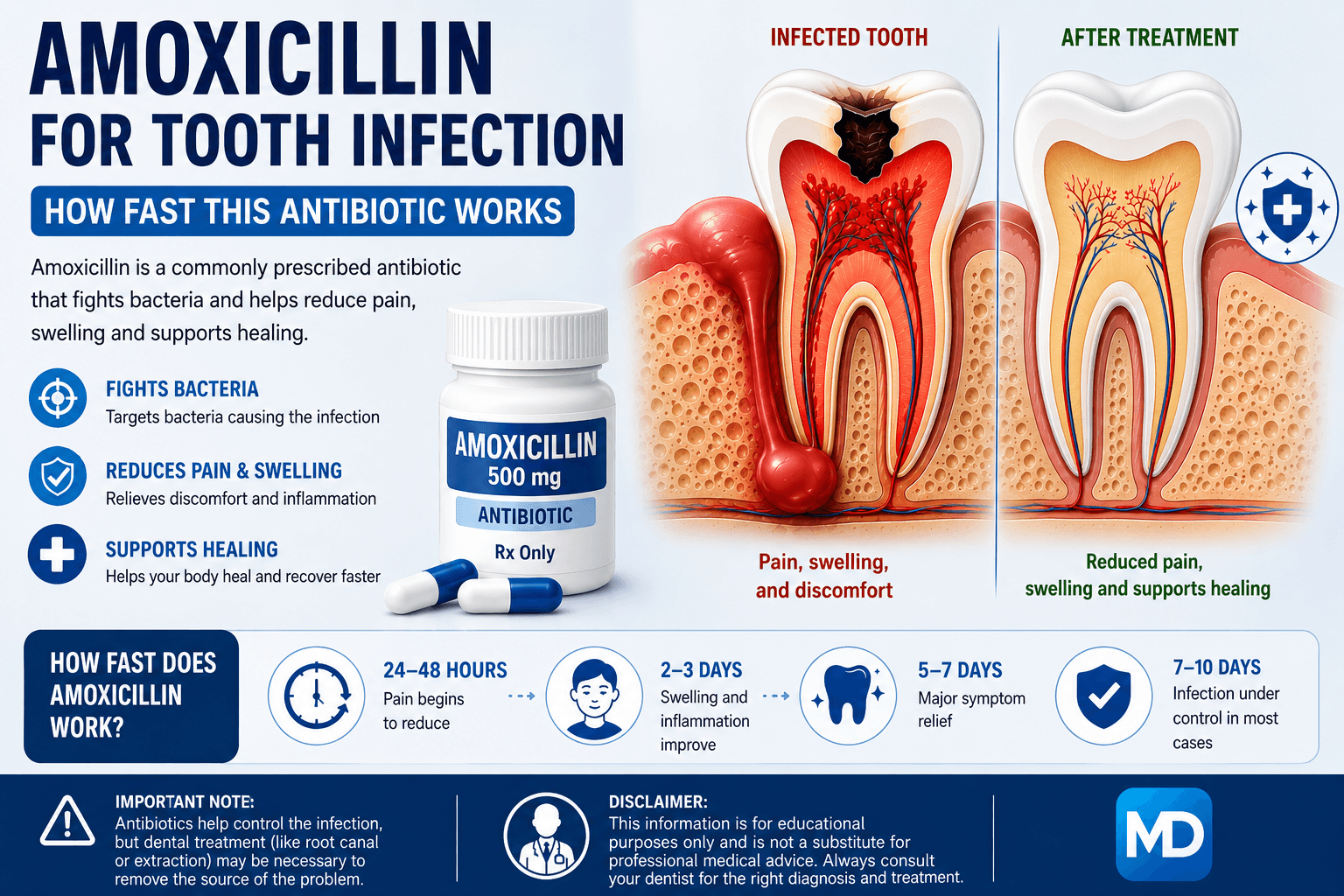
Amoxicillin typically starts working within 24 to 72 hours for tooth infections. Most patients notice pain reduction by day 2 and significant improvement by day 5–7. However, antibiotics alone may not fully cure the infection — a dentist visit is still recommended.
A tooth infection can quickly become one of the most painful dental problems a person experiences.
One of the most commonly prescribed treatments for bacterial dental infections is amoxicillin. Dentists frequently prescribe amoxicillin because it effectively targets oral bacteria responsible for tooth abscesses, gum infections, and dental pulp infections.
Amoxicillin Dosage for Tooth Infection
The correct amoxicillin dosage for tooth infection depends on the patient's age, medical history, body weight, and severity of infection. [4]
Common treatment duration: 5 to 10 days.
How Fast Does Amoxicillin Work for Tooth Infection?
Most patients begin noticing improvement within 24 to 72 hours. However, full recovery depends on: [2]
- Severity of infection
- Presence of abscess drainage
- Whether a root canal is required
- Patient immune response
- Medication adherence
2–3 days = swelling improves
5–7 days = major symptom relief
7–10 days = infection control in most cases
What Is a Tooth Infection?
A tooth infection, also called a dental abscess, occurs when harmful oral bacteria enter the inner layers of the tooth. Tooth infections commonly develop due to untreated cavities, cracked teeth, gum disease, poor oral hygiene, or previous dental trauma. Without treatment, the infection may spread into the gums, jawbone, or bloodstream.
Signs and Symptoms of Dental Infection
- Severe throbbing tooth pain
- Swollen gums
- Pus around tooth
- Facial or jaw swelling
- Difficulty chewing
- Fever and chills
- Swollen lymph nodes
- Bad breath
How Amoxicillin Works for Tooth Infections
Amoxicillin belongs to the penicillin family of antibiotics. It works by damaging bacterial cell walls, which stops bacteria from growing and multiplying. Dentists often prescribe amoxicillin because it: [2]
- Targets common oral bacteria infection strains
- Works well for dental abscess treatment
- Has strong tissue penetration
- Is generally well tolerated
Medicines Commonly Used Alongside Amoxicillin
1. Ibuprofen for Tooth Pain
Helps reduce severe tooth pain, inflammation, and jaw pain.
2. Acetaminophen for Dental Pain
Often used together with ibuprofen for stronger pain control.
3. Augmentin for Tooth Infection
Amoxicillin-clavulanate (Augmentin) is a stronger antibiotic sometimes prescribed for resistant dental infections.
4. Azithromycin for Tooth Abscess
Patients who are allergic to penicillin may be prescribed azithromycin as an alternative.
5. Metronidazole for Gum Infection
Sometimes combined with amoxicillin for severe anaerobic bacterial infections.
What If Amoxicillin Is Not Working?
If symptoms are not improving after 72 hours, contact your dentist immediately. Possible reasons include antibiotic-resistant bacteria, hidden root damage, need for abscess drainage, or poor medication adherence.
Root Canal vs Tooth Extraction
If the infection has reached the dental pulp, a dentist may recommend either root canal therapy or tooth extraction. A root canal removes infected tissue while preserving the natural tooth.
Home Remedies for Tooth Infection Relief
Home remedies cannot cure a bacterial tooth infection, but they may help reduce discomfort while taking antibiotics.
Salt Water Rinse
1/2 teaspoon salt + warm water — rinse 3–4 times daily to reduce oral inflammation.
Cold Compress
Applying a cold compress to the cheek may reduce facial swelling.
Side Effects of Amoxicillin
Like all medications, amoxicillin may cause side effects. [3]
Common Side Effects
- Nausea
- Diarrhea
- Stomach discomfort
- Mild headache
- Mild rash
Serious Side Effects
- Severe allergic reaction
- Breathing difficulty
- Persistent vomiting
- Swelling of lips or tongue
Antibiotic Resistance and Dental Infections
Resistance develops when bacteria adapt to survive repeated antibiotic exposure. To reduce resistance risks: finish the complete antibiotic course, never share antibiotics, and only use prescription antibiotics.
Emergency Warning Signs
- Difficulty breathing
- Trouble swallowing
- Rapid facial swelling
- High fever
- Confusion or dizziness
How to Prevent Future Tooth Infections
- Brush teeth twice daily
- Floss every day
- Visit dentist every 6 months
- Treat cavities early
- Limit sugary foods
Frequently Asked Questions
How fast does amoxicillin work for tooth infection?
Most patients begin feeling relief within 24 to 72 hours. Severe infections may take longer and still require dental procedures.
Can amoxicillin cure a tooth abscess?
Amoxicillin can control bacterial spread, but many abscesses still require root canal treatment or drainage.
What is the best antibiotic for tooth infection?
Amoxicillin is commonly the first choice. Other options include augmentin, azithromycin, and metronidazole depending on the infection type.
Why is my tooth still hurting after antibiotics?
The infection source inside the tooth may still be present. Persistent pain often indicates the need for root canal therapy or extraction.
Can I take ibuprofen with amoxicillin?
Many dentists recommend ibuprofen alongside amoxicillin for pain and inflammation control. Always follow professional medical advice.
Conclusion
Amoxicillin remains one of the most effective treatments for controlling bacterial dental infections, reducing swelling, and relieving pain. Most patients begin improving within 24 to 72 hours, but antibiotics alone are often not enough to permanently solve the problem. Many infections still require root canal therapy, drainage, or extraction to fully remove the source of bacteria.
References
The information provided in this article is for educational and informational purposes only and is not intended as medical advice. Always consult a qualified healthcare professional before starting or stopping any medication. MedDataTool does not replace professional medical consultation.