 MedDataTool
How to Calculate Drug Dosage by Weight (mg/kg Formula Guide)
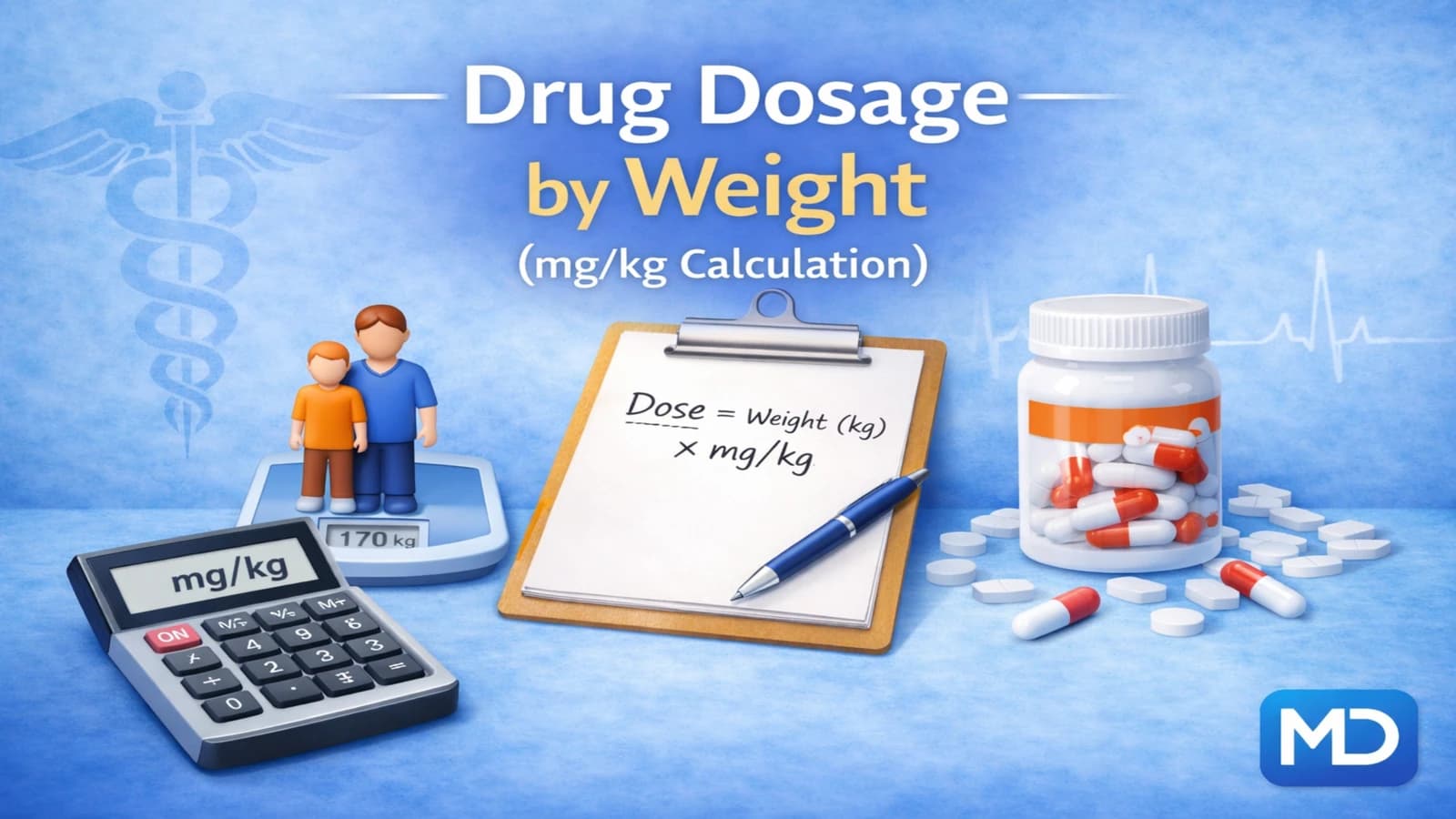
Weight-based drug dosing is one of the most important concepts in pharmacology. It forms the basis of accurate drug dosage calculation in modern medicine.
Rather than prescribing the same standard amount to every patient, doctors calculate medication doses based on body weight. This helps determine how much medication a person needs according to their weight, which is measured in kilograms (kg).
This guide explains the mg/kg formula, provides step-by-step dosage calculation examples, covers unit conversions, includes visual dosage charts, and highlights common dosing mistakes to avoid.
What is weight-based drug dosing?
Weight-based drug dosing means the prescribed amount of medication is directly proportional to the patient's body weight. The standard unit is milligrams per kilogram (mg/kg). [1]
This method is especially important for:
- Pediatric medications — children's organs are still developing and their metabolism differs significantly from adults
- Antibiotics such as amoxicillin and trimethoprim-sulfamethoxazole
- Chemotherapy drugs, which require precise dosing to avoid toxicity
- Emergency and intensive care medications where overdose can be life-threatening
The mg/kg dosage formula
The mg/kg method is the most widely used drug dose calculation formula: [2]
This formula produces the total amount of medication in milligrams that a patient needs for a single dose.
in kg
(divide lbs by 2.2)
mg/kg rate
from the prescription
kg × mg/kg
= dose in mg
mL if liquid
using drug concentration
Drug Dosage Calculation Examples
Pediatric dosage guidelines
Children require weight-based dosing because their organ systems metabolize drugs differently from adults. [3]
- Immature kidney and liver function affects how quickly drugs are cleared from the body
- A higher ratio of body water to fat compared to adults changes how drugs are distributed through tissues
- Faster metabolic rates in infants and toddlers relative to their body size
Converting pounds to kilograms
In the United States, most patients report their weight in pounds (lbs), which must be converted before using any dosage calculator.
Converting milligrams to milliliters
Many pediatric medications are dispensed as liquid suspensions. Once you know the required dose in milligrams, you need to convert it to milliliters using the drug concentration.
Example: Required dose = 200 mg. Concentration = 100 mg per 5 ml.
- Step 1 — Find mg/ml: 100 mg ÷ 5 ml = 20 mg/ml
- Step 2 — Calculate volume: 200 mg ÷ 20 mg/ml = 10 ml
Weight-based dosage reference chart
The chart below shows calculated doses at a reference rate of 10 mg/kg. Always use the specific rate prescribed by the treating physician.
Why doctors use weight-based dosing
Body weight helps estimate how a drug distributes throughout the body. Giving the same fixed dose to a 25 kg child and a 90 kg adult would result in very different drug concentrations in the blood — potentially dangerous in both directions.
Common dosage calculation mistakes
Medication dosing errors can have serious consequences. [4]
Using pounds instead of kilograms
The single most dangerous error. A 154 lb patient is 70 kg — using 154 directly in the formula produces a dose 2.2× too high.
Confusing mg, mcg, and ml
1 mg = 1,000 mcg. Misreading mcg as mg introduces a 1,000-fold error.
Ignoring maximum dose limits
Most drugs have a published ceiling dose. The formula output is not permission to exceed that limit.
Using the wrong concentration
Liquid amoxicillin is available in 125 mg/5 ml, 250 mg/5 ml, and 400 mg/5 ml. Using the wrong concentration can result in significant under or overdosing.
Safe medication practices
Healthcare professionals follow standardized protocols to prevent dosing errors: [5]
- Always confirm the patient's weight in kilograms before calculating
- Double-check the calculation independently before preparing the dose
- Verify the medication concentration on the label of each individual bottle
- Use calibrated measuring devices
- Review the published maximum dose for the specific drug before administration
When weight-based dosing is not required
Not all medications require weight-based calculations. Many commonly prescribed drugs use standard adult doses that do not vary by body weight, including most blood pressure medications, statins, and standard adult formulations of ibuprofen and acetaminophen. However, even these may require adjustment in patients with significant kidney disease or liver impairment. [6]
Frequently Asked Questions
What does mg/kg mean in drug dosing?
Mg/kg stands for milligrams of medication per kilogram of body weight. A 30 kg patient prescribed a medication at 10 mg/kg would receive 300 mg per dose.
How do I calculate a drug dose by weight?
Multiply the patient's weight in kilograms by the prescribed mg/kg dosage rate. For example: 40 kg × 15 mg/kg = 600 mg. If the patient's weight is in pounds, divide by 2.2 first.
Why are pediatric doses calculated by weight?
Children metabolize drugs differently from adults due to developing organ systems, different body fluid composition, and faster metabolic rates relative to body size.
Is mg/kg the same as mg/kg/day?
No. Mg/kg gives the dose per individual administration. Mg/kg/day gives the total daily dose, which is then divided by the number of doses per day.
Conclusion
Weight-based drug dosing using the mg/kg formula is a foundational method in modern pharmacology. It ensures each patient — especially children — receives a medication dose that is proportional to their body size. The calculation involves four steps: confirm weight in kilograms, identify the prescribed mg/kg rate, multiply to find the dose in milligrams, and convert to milliliters if a liquid formulation is being used.
For complete FDA-approved prescribing information on specific medications, visit MedDataTool to search official drug labeling data directly.
References
- Sinha M, Bose S, Sinha A. Weight-based dosing in medication use. Drug Design, Development and Therapy. 2016.
- Vallerand AH, Sanoski CA, Deglin JH. Pediatric Dosage Calculations. Davis's Drug Guide for Nurses. F.A. Davis Company; 2024.
- Capino AC et al. Medication dosing for children with overweight and obesity. Journal of Pediatric Pharmacology and Therapeutics. 2024.
- Agency for Healthcare Research and Quality. A weighty mistake: importance of accurate weight documentation in pediatric medication dosing. PSNet. 2012.
- Pennsylvania Patient Safety Authority. Medication errors: significance of accurate patient weights. Pennsylvania Patient Safety Advisory. 2009.
- Aungst TD. Weight-based medication dosage: what you should know. GoodRx Health. 2023.
The information provided in this article is for educational and informational purposes only and is not intended as medical advice. Always consult a qualified healthcare professional before starting or stopping any medication. MedDataTool does not replace professional medical consultation.